

High-quality structural information is no longer a nice-to-have in modern drug discovery and biologics development – it’s a prerequisite. From early target validation through lead optimization and mechanism-of-action studies, the structural biology method you choose has a direct impact on timelines, risk, and decision quality.
Yet selecting the right approach is rarely straightforward.



One question, multiple paths
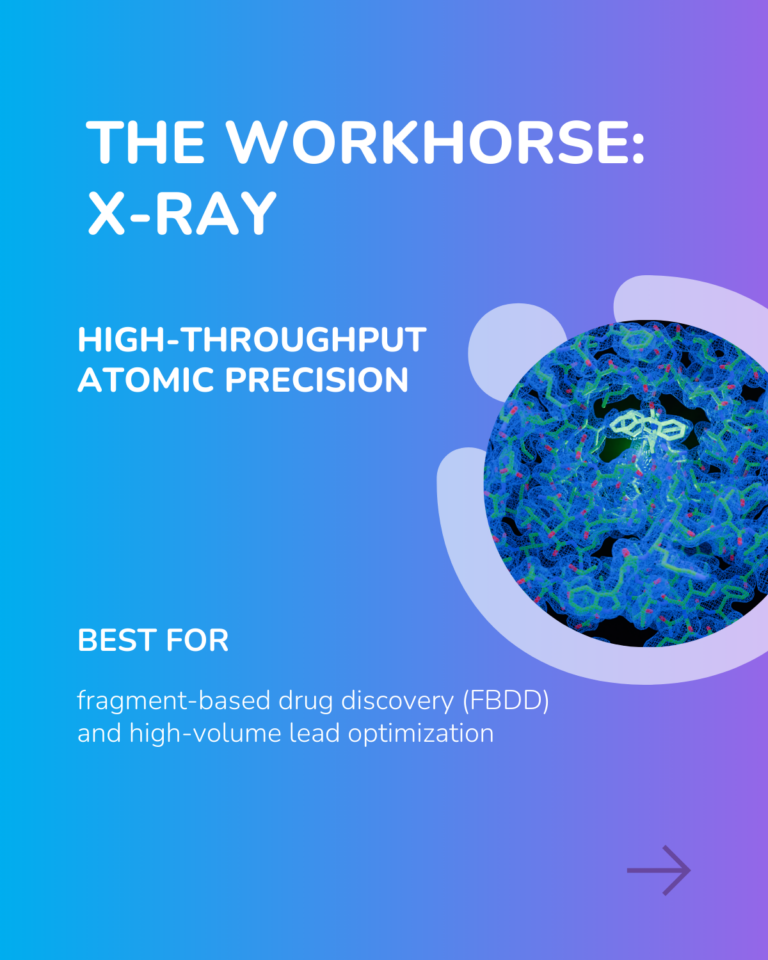
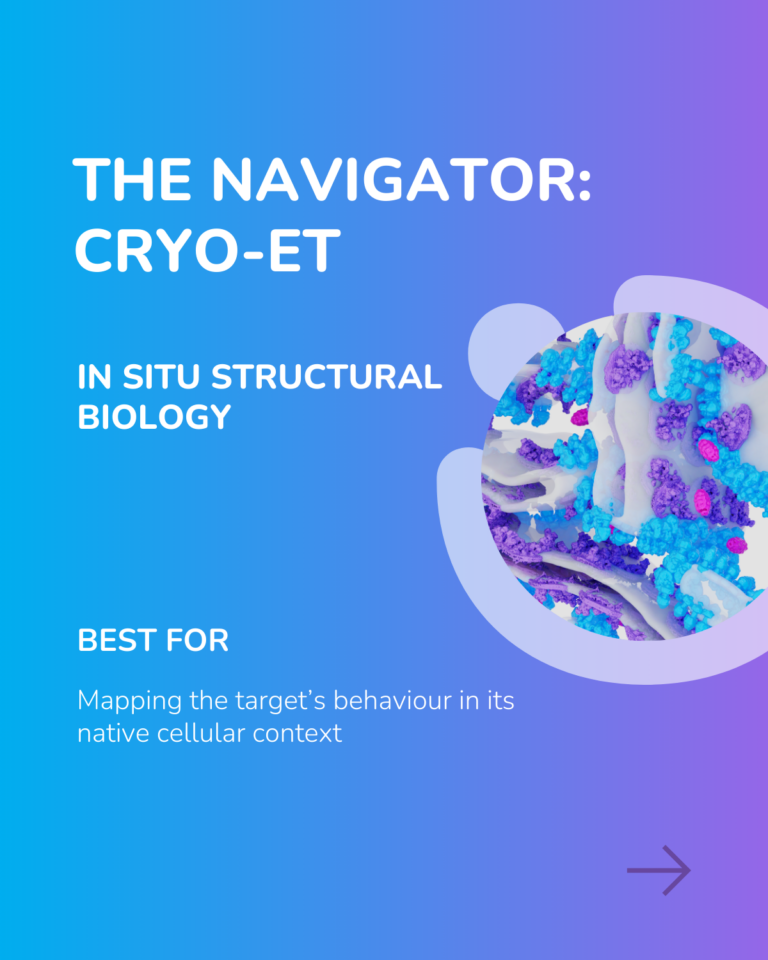
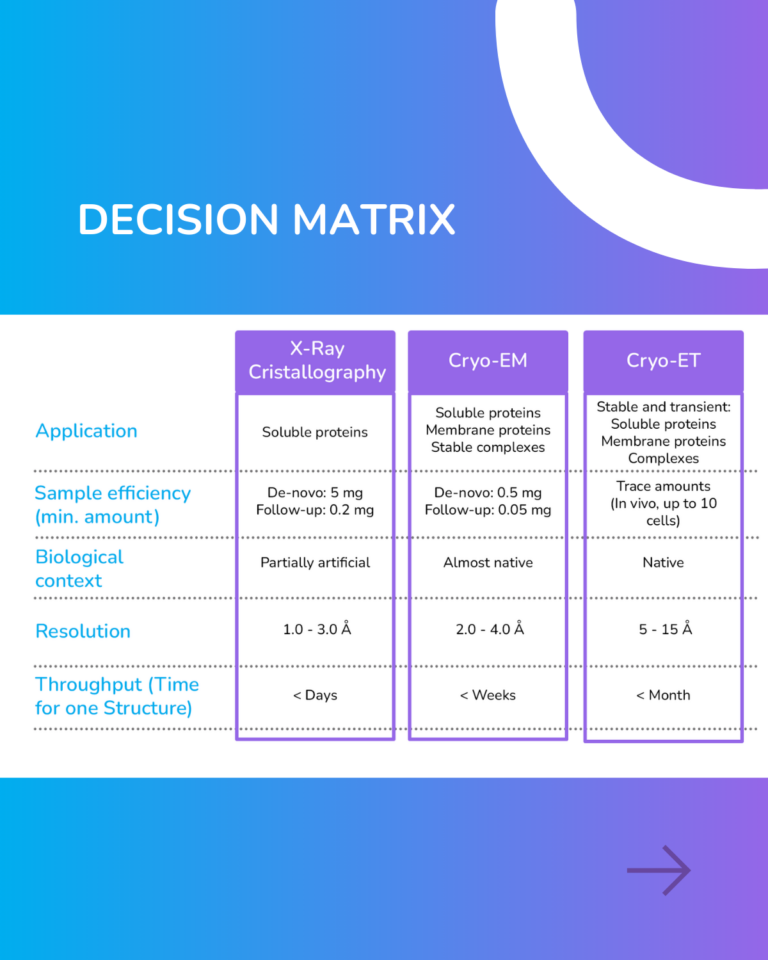
X-ray crystallography, Cryo-Electron Microscopy (Cryo-EM), and Cryo-Electron Tomography (Cryo-ET) each play a critical role in today’s discovery workflows. They differ not only in resolution, but in:
- The type of biological question they can answer
- Whether studies are performed on purified samples or in native context
- How well they handle heterogeneity and dynamics
- Their speed, scalability, and suitability for iterative design
Increasingly, successful programs rely on more than one technique – combining methods to build confidence, reduce uncertainty, and move faster through key milestones.
From structural data to program decisions
Structural insights are most valuable when they provide a clear path forward for a program. They help teams:
Accelerate hit-to-lead and lead optimization
Understand binding modes and selectivity drivers
Support biological characterization and MoA hypotheses
Generate robust evidence for downstream development and manufacturing
In this context, choosing a structural biology method is not just a technical decision, it’s a strategic program choice. It defines what evidence you can generate, how quickly you can iterate, and which risks you can retire at each stage.
A pragmatic framework for method selection
Our whitepaper, “X-Ray, Cryo-EM, or Cryo-ET? A Decision Framework,” provides a practical comparison of these three core techniques. It outlines:
When and why to use each method
How Cryo-ET, Cryo-EM, and X-ray crystallography complement one another
How an integrated, multi-modal strategy can de-risk complex discovery projects, from native-context studies to near-atomic resolution structures and high-throughput series
The goal is to help teams make clear, defensible choices that align scientific insight with program needs.